The tiny South-east Asian country of Brunei is introducing strict new Islamic laws that makes gay sex an offence punishable by stoning to death.
3 April 2019
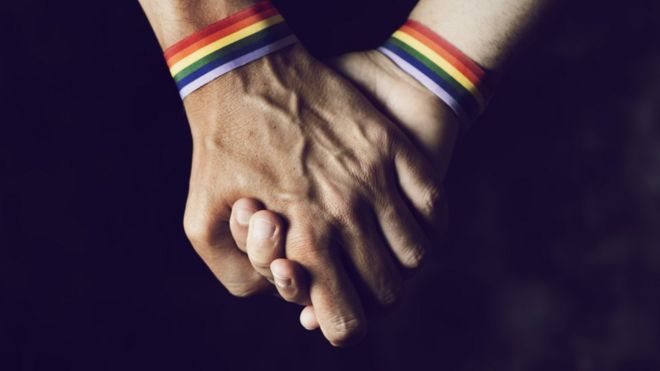
The new measures, set to begin Wednesday, also cover a range of other crimes including punishment for theft by amputation.
The move has sparked international condemnation and outcry.
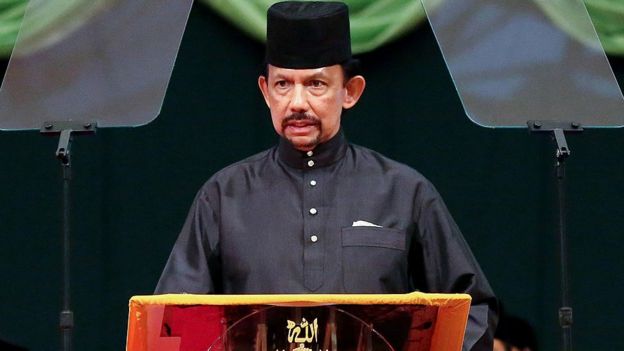
In a public address on Wednesday, the country's sultan called for "stronger" Islamic teachings.
"I want to see Islamic teachings in this country grow stronger," Sultan Hassanal Bolkiah said, according to AFP news agency, without mentioning the new laws.
Homosexuality was already illegal in Brunei and punishable by up to 10 years in jail.
Brunei's gay community has expressed shock and fear at the "medieval punishments".
"You wake up and realise that your neighbours, your family or even that nice old lady that sells prawn fritters by the side of the road doesn't think you're human, or is okay with stoning," one Bruneian gay man, who did not want to be identified, told the BBC.
Brunei, on the island of Borneo, is ruled by Sultan Hassanal and has grown rich on oil and gas exports.
The 72-year-old sultan heads the Brunei Investment Agency, which has some of the world's top hotels including the Dorchester in London and the Beverly Hills Hotel in Los Angeles in its portfolio.
This week Hollywood actor George Clooney and other celebrities called for a boycott of the luxury hotels. TV host Ellen DeGeneres also called for people to "rise up", saying "we need to do something now".
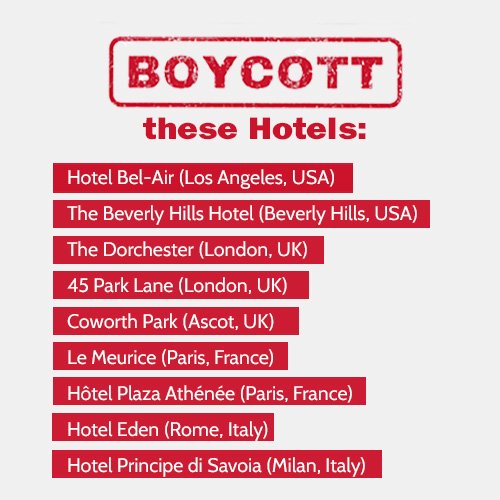
Tomorrow, the country of #Brunei will start stoning gay people to death. We need to do something now. Please boycott these hotels owned by the Sultan of Brunei. Raise your voices now. Spread the word. Rise up.

16.4K people are talking about this
End of Twitter post by @TheEllenShow

Brunei's ruling royals possess a huge private fortune and its largely ethnic-Malay population enjoy generous state handouts and pay no taxes.
Muslims make up about two-thirds of the country's population of 420,000.
Brunei has retained the death penalty but has not carried out an execution since 1957.
Is this the first time Islamic law is being introduced in Brunei?
The country first introduced Sharia law in 2014 despite widespread condemnation, giving it a dual legal system with both Sharia and Common Law. The sultan had said then that the new penal code would come into full force over several years.
The first phase, which covered crimes punishable by prison sentences and fines, was implemented in 2014. Brunei had then delayed introducing the final two phases, which cover crimes punishable by amputation and stoning.
 GETTY IMAGES
But on Saturday, the government released a statement on its website saying the Sharia penal code would be fully implemented on Wednesday.
In the days since, there has been international outrage and calls for the country to reverse course.
"These abusive provisions received widespread condemnation when plans were first discussed five years ago," said Rachel Chhoa-Howard, a Brunei researcher at Amnesty International.
"Brunei's penal code is a deeply flawed piece of legislation containing a range of provisions that violate human rights."
The United Nations echoed the statement, calling the legislation "cruel, inhuman and degrading", saying it marked a "serious setback" for human rights protection.
What is punishable under the changes to the penal code?
Public flogging as a punishment for abortion would also apply, as well as amputation for theft.
Other changes including making it a criminal offence to "persuade, tell or encourage" Muslim children under the age of 18 "to accept the teachings of religions other than Islam".
The law mostly applies to Muslims, though some aspects will apply to non-Muslims.
How are people in Brunei reacting?
One 40-year-old gay Bruneian currently seeking asylum in Canada, said the impact of the new penal code was already being felt in Brunei.
The ex-government employee, who left Brunei last year after being charged with sedition for a Facebook post that was critical of the government, said people were "afraid".
"The gay community in Brunei has never been open but when Grindr (a gay dating app) came that helped people meet in secret. But now, what I've heard is that hardly anyone is using Grindr anymore," Shahiran S Shahrani Md told the BBC.
"They're afraid that they might talk to a police officer pretending to be gay. It hasn't happened yet but because of the new laws, people are afraid," he said.
Another male Bruneian, who is not gay but has renounced Islam, said he felt "fearful and numb" in the face of the laws being implemented.
"We ordinary citizens are powerless to stop Sharia law from being implemented," said the 23-year-old who did not want to be identified.
"Under Sharia, I would face the death penalty for apostasy."
One gay man was hopeful that the laws may not actually be enforced widely.
"Honestly, I'm not too scared as the government here often bluffs with the harsh punishments. But it can and will still happen even with it being rare."
Reporting by the BBC's Yvette Tan
https://www.bbc.com/news/world-asia-47769964

