Wednesday, 20 February 2019

Israel exposes Malaysia’s hypocrisy

Total trade between the two countries reached RM5bn in 2013, almost double that of 2012, according to the Israeli Central Bureau of Statistics, points out Ng Kee Seng of The Ant Daily.

Najib in Gaza
What did national news agency Bernama report about Malaysia’s economic ties with Israel on 26 August?
The report titled “Malaysia has no economic ties with Israel – Mustapa” quoted International Trade and Industry Minister Datuk Seri Mustapa Mohamed as saying Malaysia was standing firm on its foreign policy which did not allow any diplomatic relations to be established with Israel.
Mustapa said all indirect trades between Malaysia and the region were to support the economic development (of the Palestinians) and to send humanitarian aid to the Palestinians.
“This is because Malaysian exports to Palestine and the Gaza strip had to be brought in through the port of Ashdod in Israel territory as the Gaza Port was still blocked by Israel,” he said.
Mustapa, is that so? The Times of Israel in a report titled “Malaysia favours Palestinians but buys from Israel” is saying otherwise.
The report said the lack of diplomatic relations and hostility to Israel didn’t stop several Islamic nations from (quiet) trade.
The Times of Israel reported that in the winter of 2013, Prime Minister Datuk Seri Najib Razak stepped across the Egyptian border at Rafah and made a rare visit by a head of government to Hamas-ruled Gaza.
Najib, whose country does not have diplomatic relations with Israel, had told reporters then: “We believe in the struggle of the Palestinian people. They have been suppressed and oppressed for so long.”
It was crystal clear which side he was on. Yet all that time, his country was importing more and more Israeli products, but not talking about it much, certainly not in Gaza.
Official data published by the Israeli Central Bureau of Statistics (CBS) tells of a booming, but very discreet, trade relationship that is blossoming between the two countries, despite a hawkish prime minister in Jerusalem and Najib’s Islamist and proudly pro-Palestinian government in Kuala Lumpur.
Total trade between the two countries in 2013 reached US$1.529bn (RM5bn), almost double that of 2012, according to the CBS. That figure consists mostly of Israeli exports, at US$1.457bn (RM4.7bn).
Trade continues to accelerate: between January and July this year, Israeli exports to Malaysia soared to US$884.7m (RM2.9bn), a 27 per cent jump over the same period last year.
By contrast, Malaysia’s foreign trade figures don’t carry any mention of Israel at all. In its annual data for 2012, for instance, trade with Israel is included in an entry for “Other Countries”.
A significant chunk of the trade boom can be traced to Kiryat Gat in Israel’s sandy southern plains, where global giant Intel has a plant churning out computer chips. It exports these to a second assembly plant in Malaysia. Every shipment is duly recorded in Israel’s foreign trade statistics but studiously ignored by Malaysia. Intel is a US-based company, but the Israeli government promised a five per cent co-investment in its Kiryat Gat plant that could amount to one billion shekels (RM945m).
In addition to the officially recorded movement of goods, there is a heavy current of trade flowing beneath the surface, making it hard to calculate the value.
A raft of Israeli exporters and eager buyers in Malaysia and also neighbouring Indonesia, the world’s most populous Muslim nation, are braving the political headwinds in order to do business – largely through third countries such as Singapore.
Israel’s embassy there says that most trade is done this way, and in the case of Indonesia, with the embassy’s assistance. Including deals done through a third country, the estimated value of trade between Israel and Indonesia ran as high as US$250m (RM815m) last year, 10 times the US$24.9m (RM81m) of direct trade detailed in official figures.
Israel sees commerce as a stepping stone that can lead to more co-operation with hostile states. Foreign Ministry spokesman Paul Hirschson labelled the volume of trade with Malaysia “pleasantly surprising” and that of Indonesia as “disappointingly low”.
“Israel does a lot of trade with many countries that we do not have formal diplomatic relations with and we are more than happy with this,” he said.
When asked if plans were afoot for establishing more formal dialogue, he responded: “It is no secret that we have periodically engaged in dialogue with these countries. We would like nothing more than to establish diplomatic relations and representative offices.”
Last November, Economy and Trade Minister Naftali Bennett made a visit to the Indonesian resort island of Bali, where he spoke at a World Trade Organisation summit. It was the first visit of an Israeli minister to the world’s most populous Muslim nation for 13 years. However, it is understood he did not meet with any Indonesian government representatives.
Stop the hypocrisy Mustapa! Malaysia-Israel trade ties are flourishing!
Again, why is it that Malaysian government leaders continue to find it necessary to deny it has trade relations with Israel, be it direct or indirect?
If serious, just impose sanctions on Israel? Why be a hypocrite?
So, Mustapa, what now? Deny again?
Source: theantdaily.com
https://aliran.com/web-specials/2014-web-specials/israel-exposes-malaysias-hypocrisy/


Housing Ministry: A Lift Of Blacklisted Housing Developers In Malaysia

– Take Note of These Developers If You Want To Buy From These Companies


When you’re looking to buy a house, you have to pour in a lot of research as it is definitely not cheap and usually, it’s a long-term kind of purchase. In case you didn’t know, one of the things that you must take into consideration is the developer of the housing project you’re interested in because this factor can influence the progress of your future home a lot. Most of the time, this is overlooked, so don’t make that mistake!
Source: Durian Property
Think about what if the developer suddenly flees with the money, the project will be delayed or stopped, which can cause you to lose your time and a lot of money.
But fret not, as the Ministry of Housing and Local Government has recently come out with an updated list of blacklisted problematic developers in Malaysia so that buyers will be aware and exercise caution if they want to buy from these companies.
Source: YouTube
Take note that there are four lists in total, which consist of unlicensed developers, developers who defied the Tribunal for Homebuyer Claims (TTPR), developers who failed to pay their compounds and developers involved in abandoned housing projects.
These lists are updated until September 14, 2018.

See:

https://thecoverage.my/news/malaysia/housing-ministry-a-lift-of-blacklisted-housing-developers-in-malaysia/

Tuesday, 19 February 2019

Germany tells America to verpissen off over Huawei 5G cyber-Sicherheitsbedenken

Europeans can't find any evidence of Chinese spying


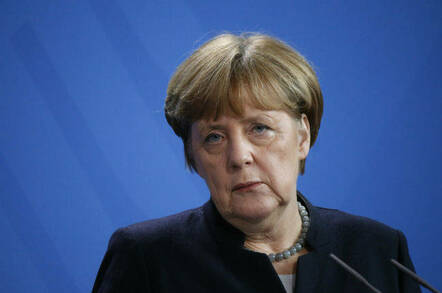
merkel
German is expected to snub US pressure to cut Huawei out of its next-generation 5G networks, rejecting claims that the Chinese manufacturer is a security risk.

According to German media reports, a weekend meeting of the German cabinet dug into the issue and effectively rejected America efforts to impose a global ban on the company. The meeting considered a report by its own security services that said it has failed to find any evidence of spying.

That report reflects a early indication by UK security services that they have been unable to find any evidence that Huawei is installing backdoors in its products, something that is credible given that GCHQ has access to Huawei's source code. A final report is expected this spring.

Coinciding with the German crunch talks, Huawei's previously quiet management has been giving pointed interviews with German and British news publications to push their case.

The company's founder Ren Zhengfei – whose daughter was arrested in Canada earlier this year at the request of American authorities – told the BBC that there was "no way the US can crush" the company, and complained that his daughter's arrest was political.

Meanwhile, the head of Huawei's German arm, Dennis Zuo, spoke to Handelsblatt and actively rejected claims of espionage. "The security of networks is our top priority," Zuo said, stating that the Chinese government "does not hold a stake in Huawei" and stays out of its factories. He said the company will be open and transparent when it comes to mobile network security.

Diplomatic silence


Although the German government meeting ultimately decided to take a diplomatic approach – neither rejecting nor approving Huawei – a clear indication that they are skeptical of American security claims came when German Data Protection Commissioner Ulrich Kelber pointedly noted in an interview with Handelsblatt that "the US itself once made sure that backdoor doors were built into Cisco hardware."
Kelber added that he found it "very interesting, that just the Americans warn against Huawei." The German foreign office is reportedly more convinced than other departments that Huawei presents a possible security threat. Earlier this month, German Chancellor Angela Merkel took a middle line on the issue, refusing to say she would ban Huawei but noting that it would not be acceptable for the company to share data with the Chinese government.

The anti-Huawei rhetoric emanating from Washington DC, which has been unquestioningly accepted within the United States, has been raising eyebrows for nearly a year.

American telcos have aggressively pushed the questionable concept of a "race to 5G" and persuaded lawmakers of its importance by using fear of Chinese dominance as a counterpoint. Currently American and European companies dominate the mobile market and possess most of the patents on emerging 5G technology but China has been making significant headway and some fear that as the 5G standard is further developed, Chinese companies will overtake US corporations and so reap the next-generation windfall.

At stake are billions of dollars and a controlling stake in the mobile networks' future. But rather than focus all their efforts on out-innovating Chinese firms, significant energy by US companies has been put into scaremongering, painting Chinese companies and particularly Huawei as a security risk.

Also at play is the fact that Huawei is able to make and sell its equivalent products for significantly less than American rivals thanks to lower labor costs.

Lacking evidence


As security claims have been dug into and no evidence has emerged, however, the American argument has fallen back on a 2017 law passed by the Chinese government that requires all Chinese companies to cooperate with its intelligence services if requested.

The Trump Administrations has seized on that law – despite the United States having similar arrangements with many technology companies – with numerous officials and most recently vice president Mike Pence explicitly warning European countries that allowing Huawei into their networks is to grant an open door to the Chinese government.

The rhetoric has got so blatant a Chinese foreign ministry spokesperson used concerns over President Trump's use of an insecure personal mobile phone to make calls to cheekily argue that if the US government is "really very worried about Apple phones being bugged, then they can change to using Huawei."

There is, of course, a risk with Huawei. As there is with American equipment. And Europeans are caught in the middle wishing to upset neither party, both of whom are important trade partners.

The solution that appears to be emerging in both the UK and Germany is one of cautious diversity, where special attention is given to the most important networks that require high levels of security and some degree of "technological autonomy" is introduced to the system to stop the country from becoming overly reliant on any particular company, American or Chinese. Japan has already rejected US calls for a Huawei ban.

There are several European companies that can also provide 5G equipment and European governments are likely to be more comfortable having one of them build out the most sensitive networks.

Remember Snowden?


The irony of course is that fears of undetectable state-sponsored spying across a network are credible only because the United States government managed to achieve exactly that through its National Security Agency (NSA).

In 2014, leaked NSA documents revealed, among many other things, that the American spy agency straight up intercepted and bugged Cisco gear on its way to buyers, to spy on network traffic. The snoops also exploited remotely accessible vulnerabilities in Cisco firewalls, and used a combination of secret laws and clandestine operations to tap into internet and mobile networks across the globe. Oh, and President Obama was forced to personally assure Chancellor Merkel that the NSA was not tapping her mobile phone, using language that appeared to confirm that it had been doing exactly that for years.

Since the NSA did that to homegrown American tech giant Cisco, no wonder Uncle Sam is paranoid about China's spies and Huawei.

Although Germany would rather stay out the argument by refusing to take a step in one direction or another with regards to the Chinese tech goliath, the Euro nation is going to hit a difficult deadline next month when it is due to open up auctions for 5G airspace.

If it is going to block Huawei in its networks, Germany would likely need to announce such a move before the auction begins in order to remove uncertainty for bidders. If it doesn't say anything, it will be taken as an implicit acknowledgement that Huawei equipment will be accepted in German 5G networks. ®

https://www.theregister.co.uk/2019/02/19/germany_huawei_5g_security/